
Preliminary Survey and Geothermal Exploration Area Offer: Bora Pulu

Geothermal Exploration Opportunities in Central Sulawesi: The Bora Pulu Area

By: Robert Buluma
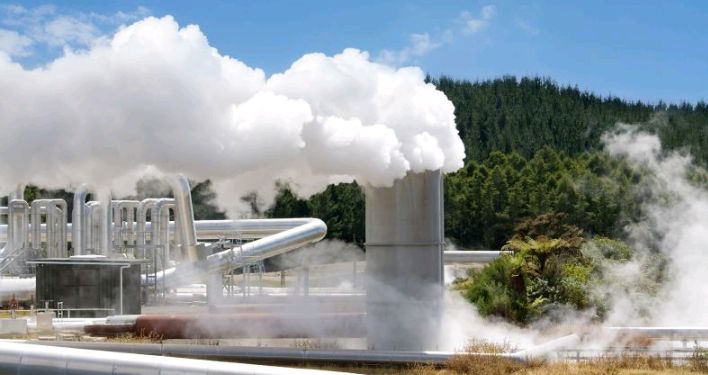
The Ministry of Energy and Mineral Resources ESDM has recently announced the opening of a tender for a geothermal exploration area in the Bora Pulu region, located in Sigi Regency and Palu City, Central Sulawesi. This is a significant opportunity for business entities engaged in the geothermal sector, offering a potential 52 MWe of geothermal reserves over an extensive area of 78,388 hectares.

The Bora Pulu Geothermal WPSPE

The geothermal Preliminary Survey and Exploration Assignment Area (WPSPE) named Bora Pulu represents a promising site for energy developers. The area is strategically located in Central Sulawesi, a region known for its geothermal potential. With possible reserves estimated at 52 MWe, this project could be a significant contributor to Indonesia's renewable energy goal

Who Can Participate?

The tender is open to business entities with experience in geothermal energy, upstream oil and gas, mineral/coal mining, or power generation sectors. To participate, interested entities must submit a complete application including administrative, technical, and financial documents. Key administrative requirements include a copy of the business entity's establishment deed, taxpayer identification numbers, company profiles, and a statement confirming the company's legal standing.

The Bidding Process

The process for the Bora Pulu WPSPE tender is straightforward, yet rigorous, adhering to the provisions set out in the geothermal sector's legal framework. Interested entities are required to register for the bidding process by submitting their forms between August 5, 2024, and September 4, 2024. The submission can be made in person at the Geothermal PSPE Selection Committee Secretariat in Central Jakarta or by a representative with a power of attorney.

The successful bidder will have the opportunity to conduct geothermal exploration in the Bora Pulu area, with the expectation of entering into a Pre-Transaction Agreement (PTA) with PT PLN (Persero) once exploration is complete and the necessary permits are obtained.

A Step Forward for Indonesia's Geothermal Ambitions

The Bora Pulu geothermal project is part of Indonesia's broader strategy to harness its vast geothermal potential, contributing to the country's renewable energy targets. As one of the world's top geothermal-rich countries, Indonesia's focus on geothermal development is not only crucial for energy diversification but also for reducing its carbon footprint.

Indonesia could be the Next Geothermal magnet as we recently did article on Developments of the 46 MW Nage Geothermal and within a blink of an eye we were hot With Geothermal when Chubu Electric is Keen on banking on the Indonesian Geothermal cake

This tender represents a critical step in unlocking the geothermal resources in Central Sulawesi, paving the way for future energy security and sustainability in the region. As the world shifts towards cleaner energy sources, projects like Bora Pulu underscore Indonesia's commitment to leading the charge in geothermal energy development.

For more detailed information and to participate in the bidding process, interested parties can visit the official EBTKE website, where all relevant documents and forms are available for download here : Port 1Port 2 ,Port 3

This geothermal initiative in Bora Pulu is an exciting opportunity for those in the renewable energy sector, and its success could set a precedent for further geothermal exploration across Indonesia.

Source:ebtke.esdmwesi

Connect With Us: LinkedInX

To place your banner and reach a global Energy Market advertise With us 

Email: alphaxiomsgeothermal@gmail.com 

Tel: +254701279086 


Comments

Hot Topics 🔥

Vulcan Energy's G-LEP Plant in Landau Paves the Way for Europe's Sustainable Lithium Revolution

Breaking Ground: Vulcan Energy's G-LEP Plant in Landau Paves the Way for Europe's Sustainable Lithium Revolution By: Robert Buluma In the heart of Germany's Rhineland-Palatinate region, a groundbreaking ceremony marked the laying of the foundation stone for the first optimized Geothermal and Lithium Extraction Plant (G-LEP) in Landau, spearheaded by Vulcan Energy Resources, an Australian-German company. As Petra Dick-Walther, State Secretary in the Ministry for Climate Protection, Environment, Energy, and Mobility of Rhineland-Palatinate, described in her recent social media post, this project represents a "quantum leap into the future." It enables the simultaneous extraction of climate-neutral lithium and generation of renewable energy from the hot thermal beds of the Upper Rhine Graben, opening new avenues for Germany's energy transition, supply security, and Europe's sovereignty over critical resources. Lithium, a key component in batteries for electri...

Geo Dipa's Game-Changing Leap: Commercial Silica and Lithium Production from Geothermal Brines by 2028

Geo Dipa's Ambitious Leap: Extracting Silica and Lithium from Geothermal Brines by 2028 Introduction In an era where the global energy transition demands sustainable sources of critical minerals, Indonesia's state-owned PT Geo Dipa Energi ( Persero ) is positioning itself at the forefront of innovation. By 2028, Geo Dipa plans to commence commercial production of silica and lithium extracted from geothermal brines, a byproduct of its geothermal power operations. This initiative not only diversifies the company's revenue streams but also aligns with Indonesia's broader goals of enhancing renewable energy capacity and supporting the electric vehicle (EV) battery supply chain.  Geothermal energy, harnessed from the Earth's heat, produces hot brines rich in dissolved minerals like lithium and silica. Traditionally viewed as waste, these brines are now seen as valuable resources. Geo Dipa's strategy builds on years of feasibility studies and international partnershi...

The 2025 U.S. Geothermal Market Report published by the National Laboratory of the Rockies & Geothermal Rising

The 2025 U.S. Geothermal Market Report published by the National Laboratory of the Rockies (NLR, formerly NREL) in collaboration with Geothermal Rising and supported by the U.S. Department of Energy's Geothermal Technologies Office (GTO), provides a comprehensive update on the geothermal sector since the 2021 report.  By:  Robert Buluma Released in 2025 (with data through mid-2025), it expands coverage to include geothermal heat pumps (GHPs) for single-building and district applications, alongside power generation and direct use. The report highlights steady growth in installed capacity, accelerating investment in next-generation technologies like enhanced geothermal systems (EGS) and closed-loop geothermal (CLG), cost declines, policy support, and emerging opportunities driven by demand for reliable, 24/7 clean energy. Geothermal Power Generation: Steady Growth and Momentum U.S. geothermal power has seen consistent expansion, with nameplate installed capacity reaching 3,96...

FINANCING STRATEGIES FOR GEOTHERMAL PROJECTS LEVERAGING TAX CREDIT INCENTIVES

FINANCING STRATEGIES FOR GEOTHERMAL PROJECTS LEVERAGING TAX CREDIT INCENTIVES Aligning Policy, Risk Mitigation, and Investor Capital to Unlock Geothermal Growth Geothermal energy stands at a unique crossroads in the global energy transition. It is one of the few renewable resources capable of delivering continuous, baseload power and heat, independent of weather conditions. Unlike solar and wind, geothermal offers grid stability, industrial heat, and long-term energy security. Yet despite its immense potential, geothermal deployment has historically lagged behind other renewables due to high upfront capital costs, geological uncertainty, and complex financing requirements. In recent years, governments and financial institutions have increasingly turned to **tax credit incentives as a strategic lever to overcome these barriers. By reducing capital expenditure, improving cash flow profiles, and attracting institutional investors, tax credits are reshaping how geothermal projects are fina...

Switch's Bold Move: 13MW Geothermal PPA with Ormat in Nevada – Game-Changer

Switch's Bold Move: Signing a 13MW Geothermal PPA with Ormat Technologies in Nevada – A Game-Changer for Sustainable Data Centers Image: Ormat Power Plant Posted by Alphaxioms Geothermal News on January 12, 2026 Welcome back to Alphaxioms Geothermal News, your go-to source for all things geothermal energy, innovation, and sustainability. As we kick off 2026, the intersection of renewable energy and high-tech industries is heating up—literally. Today, we're diving deep into a groundbreaking announcement that's set to reshape how data centers power their operations. Global data center operator Switch has inked a 20-year Power Purchase Agreement (PPA) with Ormat Technologies for 13MW of geothermal power from the Salt Wells geothermal power plant in Nevada. This isn't just another deal; it's a pivotal step toward carbon-free, reliable energy for the AI-driven future. In this comprehensive blog post, we'll unpack the details of this agreement, explore the technolog...

13 States Launch Initiative to Accelerate Geothermal Power Development

NASEO Launches Multistate Geothermal Power Accelerator: A Major Step Toward Clean, Reliable Energy By:  Robert Buluma In a significant boost for America's clean energy future, the National Association of State Energy Officials (NASEO) announced on December 18, 2025, the launch of the NASEO Geothermal Power Accelerator. This collaborative initiative brings together 13 states to fast-track the development of geothermal power in partnership with the private sector. Funded by the U.S. Department of Energy’s Geothermal Technologies Office and NASEO itself, the Accelerator aims to unlock the vast potential of geothermal energy a reliable, firm, and flexible source of clean power available around the clock. The participating states are Arizona, California, Colorado, Hawaii, Idaho, Louisiana, Montana, Nevada, New Mexico, Oregon, Pennsylvania, Utah, and West Virginia. These diverse regions, spanning traditional geothermal hotspots in the West to emerging opportunities in the East, will wo...

Banda Baru Geothermal Tender Flops: Zero Bidders Step Forward

Banda Baru Geothermal Survey Tender Fails to Attract Bidders By:  Robert Buluma Indonesia's push toward renewable energy suffered a notable setback in late 2025 when the tender for the Preliminary Survey and Exploration Assignment (WPSPE) of the Banda Baru Sepa geothermal block closed without a single bidder. Located on the remote Seram Island in Maluku Province, this 1,989-hectare site was seen as a promising addition to the nation's geothermal portfolio, with estimated potential of around 25-30 MW. The tender, open from October 31 to December 1, 2025, aimed to assign a developer for initial surveys and exploration, but the lack of interest underscores deep-rooted challenges in attracting investment to Indonesia's geothermal sector. Seram Island, a rugged and largely undeveloped landmass north of Ambon, is characterized by dense rainforests, towering mountains, and limited infrastructure. The Banda Baru block's location amplifies logistical difficulties, making it a to...

Versailles Powers Its Historic Legacy with Deep Geothermal Energy: A Model for Sustainable Urban Heating

Versailles Embraces Deep Geothermal Energy to Decarbonize Its District Heating Network By Robert Buluma The historic city of Versailles in France's Yvelines department is taking a bold step toward sustainability. On December 18, 2025, Mayor François de Mazières and Franck Lacroix, Deputy Managing Director of Engie , signed a 32-year concession agreement. This partnership entrusts Engie with transforming, modernizing, and greening the city's district heating network, aiming to slash carbon emissions while providing reliable, renewable heat to residents. At the project's core is deep geothermal energy, harnessing the natural heat from underground aquifers. The site targets the Dogger aquifer, a limestone formation from the Middle Jurassic period, located about 1,500 meters below the Paris Basin. Water in this layer reaches temperatures of around 60°C, making it ideal for heating. The plan involves drilling a geothermal doublet two wells: one to extract hot water and another t...

GEOLOG Acquires Quad Ltd and QO Inc. to Revamp Wellsite Geology and Pore Pressure Outreach

Revolutionizing the Depths: How GEOLOG's Strategic Acquisition is Supercharging Geothermal Energy's Future By: Robert Buluma Imagine plunging miles beneath the Earth's surface, tapping into an ancient furnace of heat that never sleeps, never falters, and never runs out. This is geothermal energy—the planet's own endless battery, capable of powering civilizations with clean, reliable electricity around the clock. While solar panels go dark at night and wind turbines stand idle in calm air, geothermal delivers baseload power with capacity factors often above 90%. In a world racing toward net-zero emissions and facing exploding energy demands from data centers, electric vehicles, and industrial growth, geothermal is emerging as the sleeping giant ready to awaken. Scaling geothermal globally, however, is no simple task. Drilling deep into the crust exposes crews to extreme conditions: temperatures soaring past 300°C, highly corrosive fluids, and rock so hard it can destroy...

Amsterdam Strikes Geothermal Gold: Hot, Thick, Permeable Reservoir Confirmed

Breakthrough Beneath the Beach: Amsterdam Region Hits Geothermal Paydirt at Strandeiland By: Robert Buluma The Netherlands just took a giant leap toward fossil-free heating. On the artificial island of Strandeiland (part of Amsterdam’s fast-growing IJburg district), the SCAN exploration well has officially confirmed what the geothermal community has been hoping for: a thick, hot, and , most importantly permeable reservoir in the Slochteren Formation. Key numbers that matter:   Reservoir thickness: 152 meters   Bottom-hole temperature: 66 °C   Permeability: confirmed via successful production and injection tests   That’s not screaming-hot by Icelandic standards, but for direct-use district heating in one of Europe’s densest urban areas, 66 °C is more than enough to supply thousands of homes with clean, baseload heat – forever. Why This Well Changes Everything for the Netherlands The Dutch government launched the SCAN program (Seismic Campaign Nethe...